
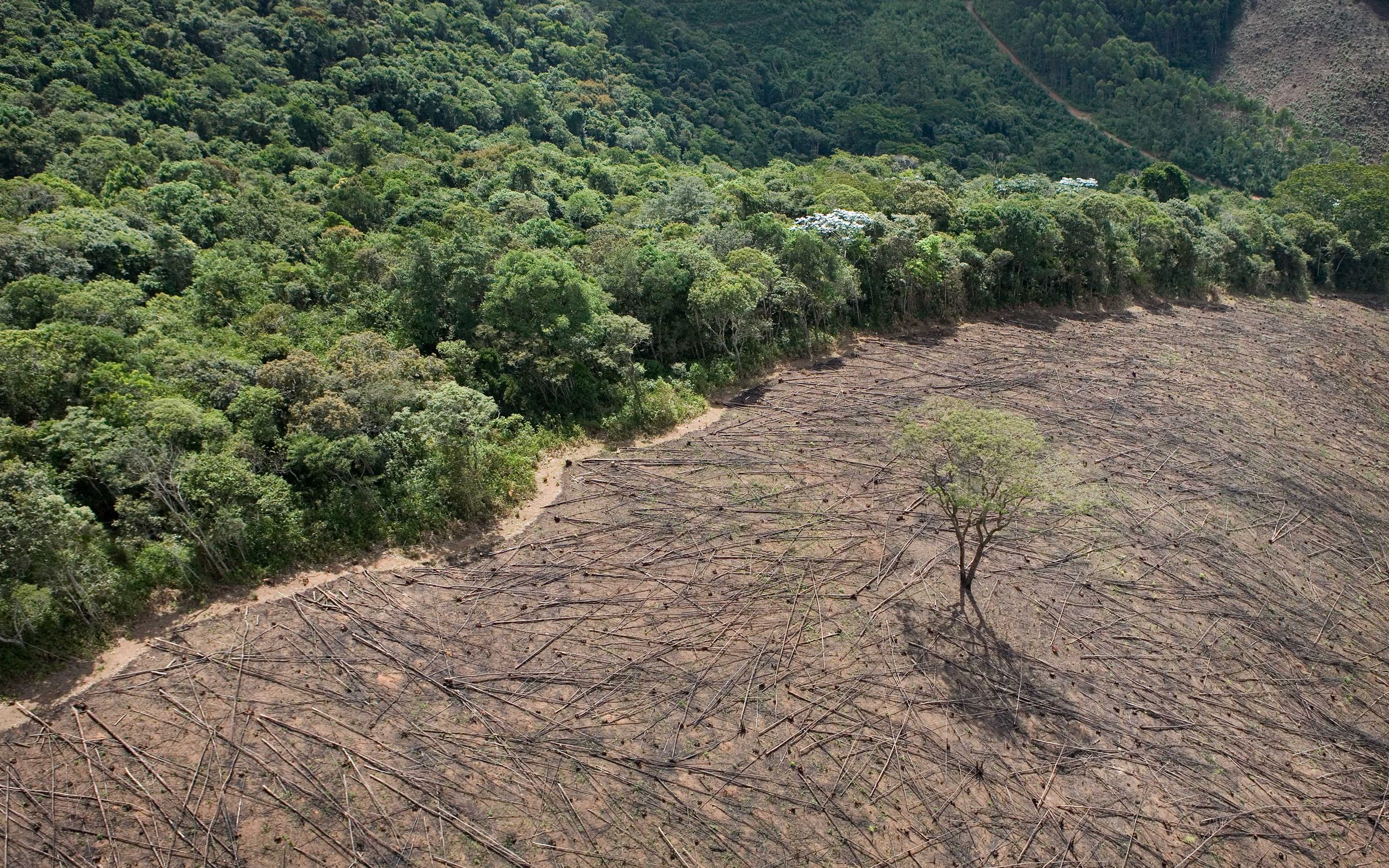
The EU has unveiled the Carbon Border Adjustment Mechanism (CBAM), a system of carbon pricing that will impose a fee on a carbon-intensive goods imported into the EU. According to the CBAM regulations, importers from the EU will have to disclose the upstream emissions in some imported goods and buy carbon certificates at a price equal to what they would have paid for carbon if the imported items had been made in accordance with the EU’s Emission Trading System (ETS). The cost of the carbon used in the manufacturing of the imported goods can be subtracted from the EU importer’s CBAM payment obligation if a non-EU producer can show that they have already paid a price for the carbon used in a third-country. There is a chance for “carbon leakage” as the EU works to step up its efforts to combat climate change and as less strict climate restrictions continue in non-EU nations. Carbon leakage occurs when EU producers shift their carbon-intensive manufacturing facilities to nations with relaxed climate regulations or when previously made goods are replaced by equivalent imports with a high carbon footprint. GCAS offer a range of CBAM services to help organizations meet the requirements – from GHG accounting and reporting to verification. Support through the transitional period Develop & implement an GHG accounting methodology and system as per CBAM requirements. Training and Implementation Technical training for your industry sector and products. Gap Analysis We assess current GHG emission accounting, reporting and alignment to CBAM requirements. GHG emission Reporting & Verification Reporting and Verification assistance from Accredited verifier (From 2026) Contact us here
Post Type Archives: Service
Environmental Product Declarations

EPD is a verified and registered document that communicates transparent & comparable information about the life-cycle environmental impact of a product. The EPD System is a global programme for environmental declarations based on the ISO 14040/14044, ISO 14025, EN 15804 or ISO 21930 standards. Environmental Product Declarations (EPDs) are Eco-labels that display data of predetermined environmental parameter categories according to the international standard ISO 14025. EPDs aim at supplying and easily communicating reliable & externally verified environmental information and provide a platform for the fair comparison of the environmental performance of products and services. EPDs help reduce carbon emissions in the construction sector by allowing users to assess the environmental consequences of various materials and products in order to choose the most environmentally friendly alternative. Why GCAS GCAS has the tools to support your LCA and EPD work & increase your efficiency within the organization. We have been approved by the International Program Operators as EPD Consultants. Most architects and designers across the world are now familiar with LCA & are looking for products that have both an LCA and an EPD. They think EPDs are useful because they provide thorough information on sustainability performance and allow you to evaluate the sustainability of different items. Contact us here
Net Zero Solutions

Net Zero Solutions – Governments, businesses, and other organizations are increasingly recognizing that the physical hazards connected with climate change will continue to grow unless the world cuts greenhouse gas (GHG) emissions and offsets any residual emissions with equal GHG removals from the atmosphere. To accomplish our climate change goals, all new buildings must be net zero by 2030. This means that by 2025, all new structures must be constructed to fulfill these goals. This page outlines the operational carbon strategy that will be required to achieve zero-carbon buildings The Net Zero Carbon Buildings Commitment encourages the building and construction industry to take steps to decarbonize the built environment, as well as to urge others to do so and remove impediments to implementation. Getting your company from point A to point Z is a journey. There is no question that achieving net zero will be difficult, but with only the next decade to keep global warming to safe limits, it is a task we must all face together. Our methodology to net zero is aimed to make the pathway more clear, as well as to assist you in mitigating risks and identifying possibilities for your company along the way. It entails both activity and return on investment. Contact us here
Cradle to Cradle Certification

Why is demonstrating environmental sustainability important? The Cradle to Cradle Certification Product Standard offers a pathway for product manufacturers to make measurable progress towards UN Sustainable Development Goals (SDG). The Cradle to Cradle Certified Product Standard is used by leading brands, retailers, designers, and manufacturers across the value chain to ensure that their goods have a beneficial impact on people and the environment. Cradle to Cradle certification attempts to measure the environmental and social sustainability of your invention in five categories: material health, material reutilization, renewable energy & carbon management, water stewardship, and social fairness. This certification program provides a transformative framework for designing and making products in a manner that helps to address many Sustainable Development Goals. Cradle to Cradle Certified products can also help contribute points under the LEED v4, BREEAM etc… Green building rating systems. The Cradle to Cradle Certified Standard Program guides designers and manufacturers through a continual improvement process that looks at a product through five quality categories. Contact us here
GHG Assurance Validation
GHG Assurance Validation – We offer a variety of validation and verification programs to help businesses add credibility and certainty to their GHG Assurance & Validation emission claims, as well as reports to back up their claims. In compliance with ISO 14064-3 standards, GCAS sustainability experts provide unbiased data validation and verification of Greenhouse Gas (GHG) emissions for any industrial sectors. The assurance statement gives your GHG assertions and claims credibility by stating that they are devoid of mistakes, omissions, and misstatements. Our assurance statement is recognized globally. There are two stages to ISO 14064. Validation requires an assessment of your project design information and documents, followed by a validation opinion statement certifying that you can meet the agreed-upon requirements for GHG removals or emission reductions. Verification guarantees that the climate change data and information you’ve reported is accurate, fair, and dependable, and that it’s backed up by a solid management system. GCAS Review Process Review of the boundary, approach, and scope of carbon footprint to ensure its relevance and completeness; Review of data sources, accuracy and quality of the data used to calculate the footprint; Audit of the carbon intensity metric in line with current best practice; Analysis of overall data management process covering data measurement, collection aggregation and reporting process; Review of the methodology, calculations, emissions factors and assumptions for their accuracy and appropriateness so that they meet international standards applicable to the business. Carbon Footprint Calculator Contact us here
Advanced Zero Energy Design
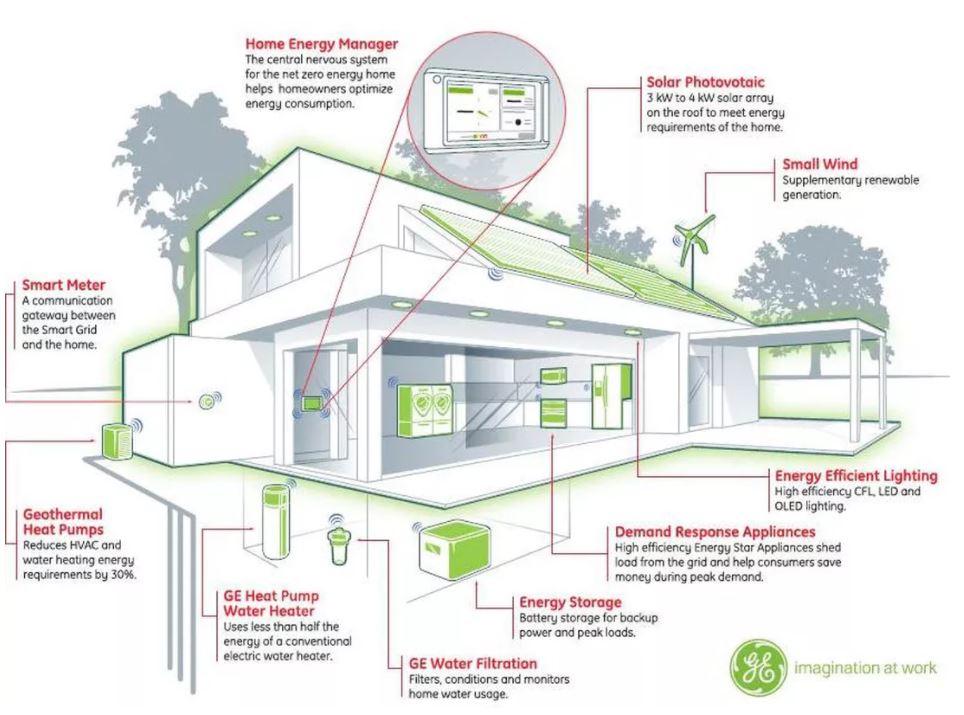
Through Advanced Zero Energy Design, cities can become DRIVERS OF SUSTAINABILITY and increase ecological, social and economic capital. Why Zero Energy Design? Global warming and climate change are raising issues during the last couple of decades. Buildings including commercial and residential ones are major contributors to energy consumption. Zero Energy Design can be achieved by significantly reducing energy use through incorporation of energy-efficient strategies and solutions into the design, construction, and operation of new buildings and commencing retrofits to improve the efficiency of existing buildings. Most often, use of on-site and off-site renewable energy sources are required to meet the Net-Zero Energy goal. GCAS provide solutions to establish a proper measurement and verification protocol to help track the ongoing use of energy in order to validate that the goal of Net-Zero Energy is achieved for the life of the building. We also manage the LEED certification process to ensure that the building continues to perform as Net-Zero Energy. Contact us here
Building Life Cycle Assessment
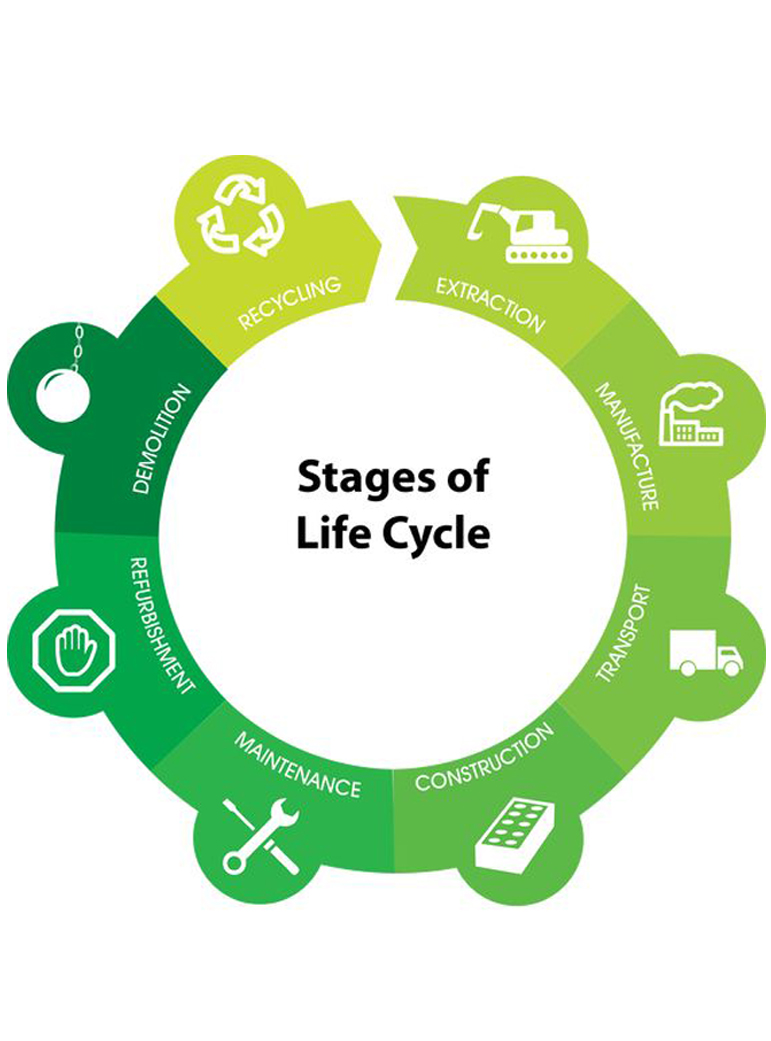
Building Life Cycle Assessment – Building and utilizing a structure for a long time has long-term effects on human health and the environment. The rapidly expanding science of life cycle assessment (LCA) illuminates these impacts in terms of their quality, severity, and length. Building generates environmental impacts throughout its life cycle. The various stages of a typical life cycle as defined in LCA are production & construction stages, use stage, end-of-life stage, and externalized impacts beyond the system boundary. In the building industry, LCA is commonly used to: Help building owners make informed choices regarding sustainability and/ or resilience. Evaluate design options by providing insight into materials choices and their environmental impacts. Achieve green building certification (e.g. in LEED v4 or Living Building Challenge). Assist in assessing the environmental benefits of new products and/or policy. State that a system or product is environmentally preferable to another (to make a comparative assertion). Compare to benchmarks to evaluate a building’s performance. Importance of Building Life cycle Assessment A global viewpoint that Buildings are responsible for 39% of worldwide carbon emissions. Construction Industry must accept responsibility for their projects’ environmental impact. The building industry is faced with the challenge of providing better homes to people all over the world while minimizing the environmental impact of new construction. Life-cycle assessment is a scientific process that can aid green building professionals in their attempts to construct more sustainable buildings. Contact us here
Management System Certification

Formal Management System Certification – Burden or Benefit? GCAS offers independent, impartial assessment & certification and many of the leading companies choose us for their Management System Certification Assurance needs. GCAS ensures our assessments focus on the areas and issues that are important to client business, helping to improve performance and reduce business risk. GCAS offer independant, impartial assessment & certification and many of the leading companies choose us for their Management System Assurance needs. GCAS provides services with an independant view of client business processes and specific market advantage that our clients recognize. GCAS provides assistance to obtain API Q1 (American Petroleum Institute), API Q2 and API Monogram License and Certifications for Oil & Gas sectors. Contact us here
Product Certification & Approvals

A solution for all your Inspection, Product Certification and Approvals Product testing is the ideal way to identify a product’s potential before the product development process. That eliminates the risk of developing undesirable products, which could be costly and time-consuming down the road. We partner with global agencies and offer a full range of testing and certification services including new product development, pre-assessment, gap analysis, batch testing and full compliance testing. CE Mark Approval GCAS can assist for your product to comply with EU safety, health and environmental requirements and how to place a CE marking on your product. The CE mark indicates a product with EU legislation and so enables the free movement of products in the market. Contact us for your CE mark and Inspection requirements. Click here